
For centuries, protests have been around as a form of expression, a way to be heard, and a method for people to resist and fight for what they believe in. A protest is defined as a public expression of disapproval or objection to a matter. Historically, protests have been used to express opposition to government policies, injustice, or decisions. The most commonly known forms of protests throughout time include marches, sit-ins, walk-outs, and rallies, to bring attention to these situations.
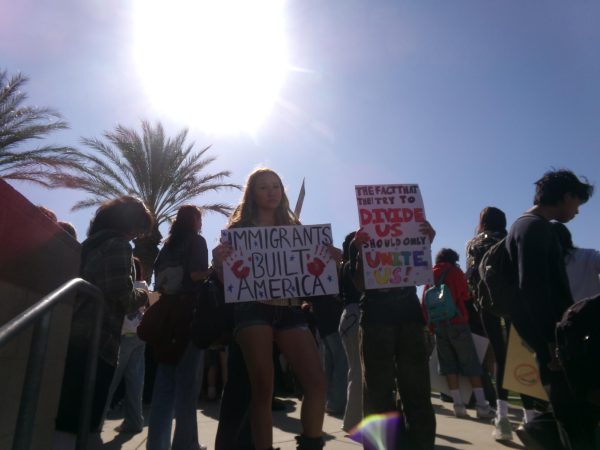
Student-led protests have played a major role throughout history. This history continues to be demonstrated in Eleanor Roosevelt High School’s recent student walkout protest.

ERHS senior Cesar Perez shares that, “What protesting really means to me is speaking out for what’s right and what you feel is correct, speaking out for what you feel pride in believing.”
Across history, protests have helped shape what America is now, politically, socially, and economically. These protests have been embedded in American history since the nation’s beginning. One of the earliest and most influential protests in America was the Boston Tea Party of 1773. During which American colonists protested the British taxation without representation. The results of this collective resistance further intensified tensions between the American colonies and Great Britain, ultimately leading to the American Revolution. In the years that followed, more protests arose, including boycotts of British goods, the Stamp Act protests, and the Sons of Liberty demonstrations.

(Madi Battin)
Although early protests established separation from British rule, these protests did not end with the revolution. Throughout centuries, Americans continued to speak out and push for change. Abolitionists in the 1800’s organized rallies and publications speaking out against slavery, directly contributing to the Emancipation Proclamation. The womens sufferage protest went on for decades, starting with the Seneca Falls Convention of 1848, going on till 1920 when the 19 amendment was ratified, giving women the right to vote. During these protests, they organized marches and conventions to demand these rights. Later, we see the labor movements, organized strikes, and protests to advocate for safer working conditions, fair wages, and reasonable hours. As our country continued to expand and grow, protests were key to addressing inequality and creating change.
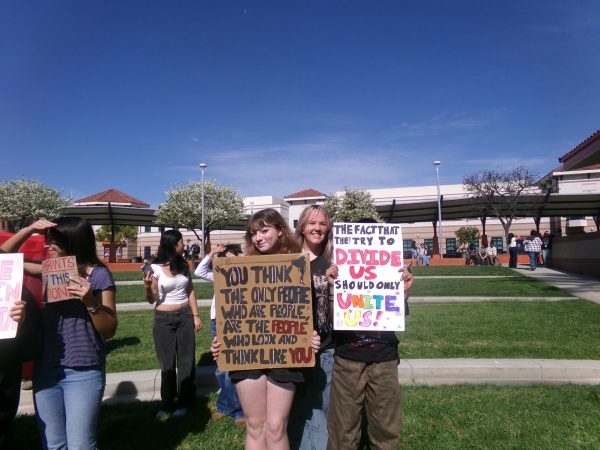
Reflecting on the purpose of protests, ERHS senior Michelle Sibrian shares why she believes protests are important, ” I do think protests create change. It’s so important to keep these issues relevant in a time where empathy seems rare, and the internet captures attention spans. People who don’t feel affected wouldn’t understand the gravity of these problems without protests, in my opinion. Even something as small as helping someone understand our point of view is significant.”
Sibrian also shared why she felt important to protest today, “I’m the daughter of two immigrants. My existence quite literally would have been impossible without immigration, and my family works hard here. Both my families came from Latin America, fleeing collapsing communist governments that were killing citizens. That story is true for many immigrants; they fought for us to have a better life, and now we have to protect them, citizens or not.”
By the 1960’s, protests became one of the most seen and influential tools for working for social and political changes in the United States. The civil rights movement relied on protests for its voice to be heard, through sit-ins, which were often student-led. Boycotts of segregated services, and freedom rides were actvists would ride segregated buses into the segregated south to challenge the Supreme Court ruling. During this era, the Chicano movement was gaining traction as Mexican American communities organized for labor rights, educational reforms, and greater political representation.
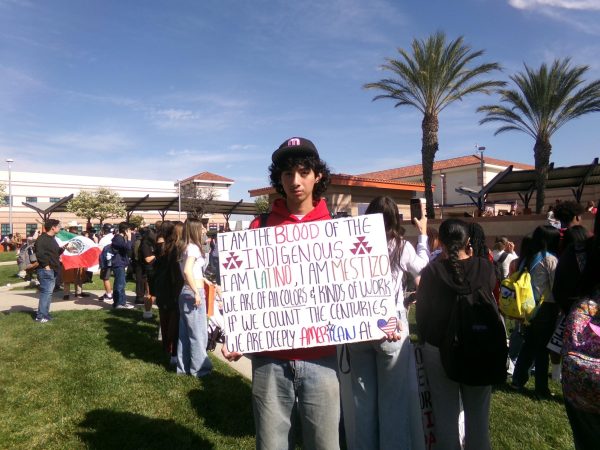
At the same time, the anti-Vietnam War protests were spreading all across college campuses. Student activists strongly opposed the U.S involvement overseas and the draft. In 1970, tensions in ken state Universty intesifed, when the National Guard open fired during a campus protest. An event further intensifying the debate over war and student activism. Student-led walkouts, including the 1968 East Los Angeles protests, further demonstrate how important the role of young people is in shaping America.
Today, student activism continues, reflecting patterns seen throughout history. Much like the earlier generations who organized walkouts, boycotts, and marches to bring attention to political and social issues, students at Eleanor Roosevelt High School on Febuary 6 organized an anti-ICE (Immigration and Customs Enforcement) walk-out to voice their concerns. However, ERHS isn’t alone with this protest; many other schools, local and not, have organized protests and walk-outs. Reflecting this broader theme seen throughout history, when national issues spark debate, students often respond through organized protests. Much like the campus protests of the 1960’s or the East Los Angeles walkouts of 1968, today student-led protests show how young people continue to be active in voicing issues in their communities.
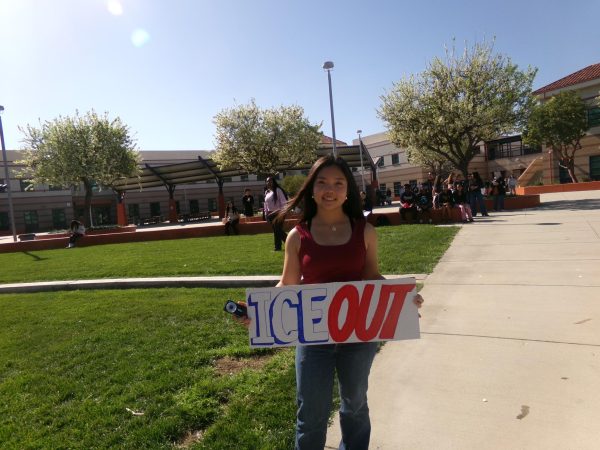
ERHS senior Ellie Chong shares why she feels protests are so important, ” Protesting is a privilege, especially as a citizen of America, it’s something that’s not available to everyone, and for me to have that privilege it means I have a responsibility to use it, so I speak today for all the people that cannot.”
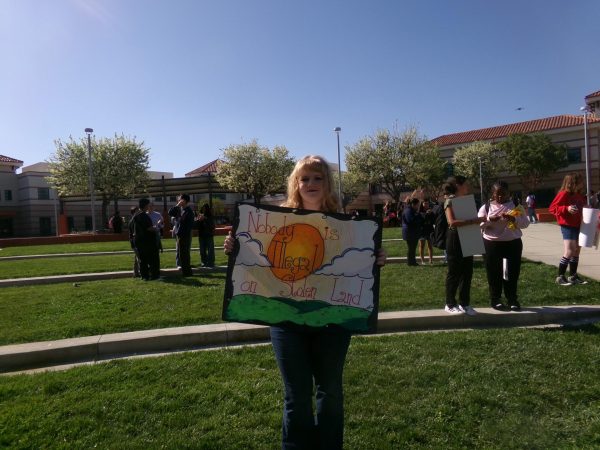
Abby Stowell, an ERHS senior, shares why she felt important to protest today, “Protesting means protesting for my uncle, my uncles familly, my cousin, and protesting for their freedom. It’s especially scary for me because they are legal here, and they (ICE) are going after those who live here through the right avenue. I want safety to be for everyone. I want families not to be torn apart. I want everybody to have a safe and stable home, in a country that’s supposed to be founded on freedom,” Stowell states.
From the Boston Tea Party to modern-day student-led walkouts, protesting has remained a constant force in American history. Although the issues and methods have evolved, the purpose has remained a staple of giving communities and individuals a voice. As students across the country, including those at ERHS, continue to organize protests, they continue to contribute to shaping America.






Kyle • Feb 17, 2026 at 12:55 pm
This is totally radical! Awesome article brochacho cheese.