Scientists just found something wild: two massive finned octopus species from the Cretaceous period, and one of the beings, Nanaimoteuthis haggarti, is theorized to grow to nearly 62 feet long.
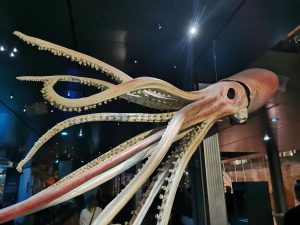
That’s bigger than today’s giant squid, which usually holds the title of the world’s largest invertebrate. The other species, Nanaimoteuthis jeletzkyi, wasn’t exactly small either; it was about 25 feet long. If that size holds up, we’ll have to rethink which animal owned the ancient oceans.
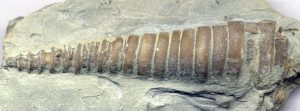
Their evidence doesn’t come from complete fossils. Instead, researchers worked with fossilized octopus beaks, which are basically the only parts that tend to survive buried in rock.
These beaks turned up in Japan and Canada, with scientists going back to the specimens that people had already found and digging up more.
They used some pretty advanced technology, like 3D imaging and AI reconstruction, to piece together what these giant animals probably looked like, and the level of detail is pretty mind-blowing.
When they looked at the beaks, they saw some crazy wear and tear, with up to a tenth of the jaw worn away. That kind of damage fits with chomping on tough prey, like things with shells, cephalopods, clams, and even bones. That means these octopuses had seriously powerful jaws and almost surgical hunting skills.
From what they found, scientists say these octopuses were probably at the top of the food chain. They shared their world with marine reptiles like mosasaurs and plesiosaurs, alongside big predatory fish, making ancient seas a lot more competitive and complicated than most people imagined.
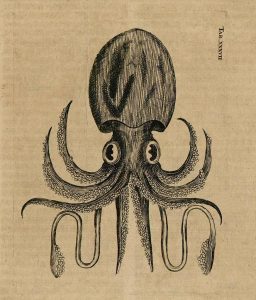
Unlike the squishier octopuses we know today, these giants had big paddle-like fins to propel themselves through water.
Odd patterns on their jaw wear also hint at lateralized behavior, kind of like handedness in humans, which points to sophisticated brains and sharp hunting tactics, not too different from modern cephalopods.
Since octopuses are mostly soft blobs, it’s really tough to find fossils. That’s why this discovery stands out. It shows how digital scans and virtual models can capture information from fossils that barely exist, revealing stuff we’d otherwise never know.
Overall, the study shakes up old ideas that vertebrates dominated ancient oceans. Turns out, giant invertebrates may have played a huge role, too.
The research opens the door to hunting for more hidden giants, suggesting there could be other massive, soft-bodied predators lurking in fossils, just waiting to be found.