“Hey Meta, how do I lose 10 pounds overnight?”
“Hey Chat GPT, is this mole cancer?”
“Hey Gemini, candy salad is still technically salad, right?”
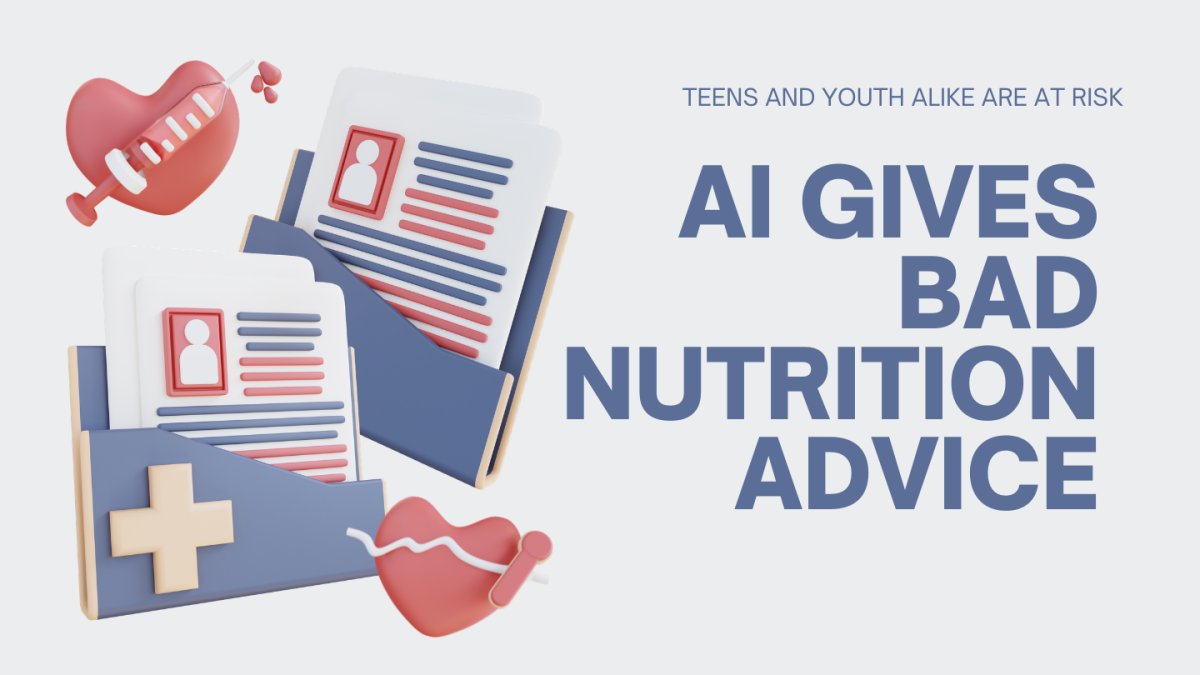
Many teens have fallen under the impression that AI knows all the answers and solutions to their problems. It´s a deep rabbit hole that influences more and more young individuals every day, and as its use increases, its technology advances. As artificial intelligence becomes more integrated into everyday life, people turn to it for quick and free answers to health-related questions.
Although these tools are easily accessible, AI will never be a true professional. It´s artificial! General information and guidance can be provided, however, experts warn that AI can give misleading and incomplete advice that can pose potential risks for young users who don´t know any better.
As of right now, chatbots and health apps are coded and trained to give advice based on large databases. This is why they respond so fast to mental health and health concerns, and this can make teens feel safer and more comfortable than opening up to an adult. They provide straightforward and unbiased information to the user, however, AI systems are unaware of the user´s medical history, emotional state, and unique circumstances. AI knows data and across-the-board information, but it doesn´t know the user.
“I feel like people who use AI for therapy are picking a more comfortable option but not a realistic, long-lasting one… There´s definitely professionals in this field for a reason,” says Mark Vuldak, a psych student in CNUSD.
People who work in the medical and healthcare fields are often concerned that AI will take over their careers. However, right now, its major weakness is how generalized its advice is, and that it´s not able to prescribe medications.
For example, if a teen were asking about weight loss or nutrition, they might receive suggestions that aren´t applicable to their age, body, and health requirements. This can create unhealthy habits and unrealistic expectations.
“I hope that AI is coded to give disclaimers about this topic in the future. It´d probably do more good than the advice being given out,” says Vincent Palmer, a stem major at UCI.