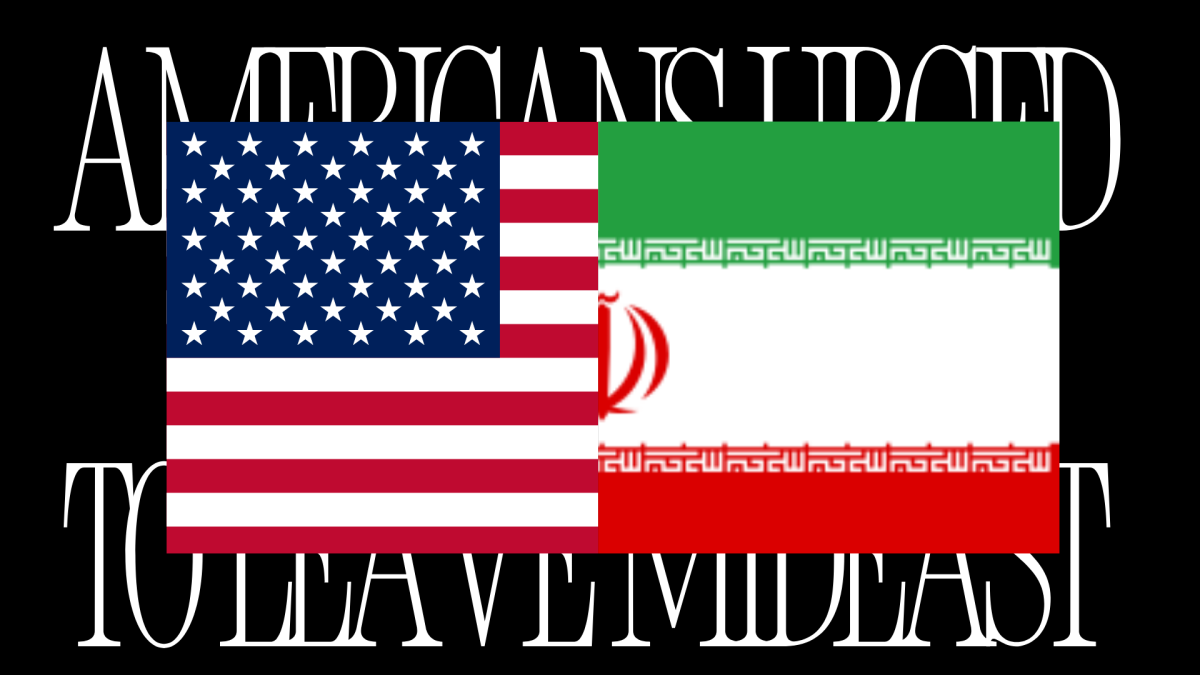
On March 2, the U.S State Department urged any Americans residing overseas to immediately depart from several Middle Eastern countries as tensions between the Islamic Republic of Iran and the United States of America intensified.
The mentioned countries consist of Iran, the United Arab Emirates, Saudi Arabia, Bahrain, Egypt, Iraq, Israel, Palestine, Jordan, Kuwait, Lebanon, Oman, Qatar, Syria, and Yemen. As this occurs, it is believed that nearly one million American citizens reside in the included regions. These individuals were initially instructed to leave “using the available commercial transportation.” However, the State Department has now said that it will be facilitating charter flights from the United Arab Emirates, Saudi Arabia, and Jordan for Americans wishing to withdraw.
Since the killing of the Ayatollah, it has been estimated that over 500 Iranian civilians have been killed so far by the U.S-Israeli campaign. According to the Iranian Red Crescent, there have been over 1,300 strikes in the country, and more than 130 cities have been put under attack. Despite this rapid increase in violence, neither America nor Israel has given a clear explanation as to what the objectives of war with Iran are or how it is presumed to end. In Israel, there have been 11 reported deaths, and 31 in Lebanon.
Despite the reported charter flights being offered, there have been reports of flights in the region being cancelled or suspended since the U.S and Israel began attacking Iran. In response, Iran has retaliated by firing missiles and drones at Middle Eastern countries allied to the U.S. According to a statement by Dylan Johnson of the State Department on X, they have been in “… direct contact with nearly 3,000 Americans abroad.” There have also been a reported 9,000 US citizens successfully returned home from the Middle East.
Many people are concerned about this situation and what it entails for the world.
Mia Alt, an ERHS student, said that the ongoing crisis is “very worrying, especially since Iran has many weapons that could be pointed towards us [Americans] if the war continues even more.”