
On November 19, the Senate finally passed the bill that will force the Department of Justice to release federal records tied to Jefferey Epstein. The legislation then went to President Trump’s desk, and he has since signed it into law. The Epstein files have been an ongoing issue these past months, with most democrats wanting to release the files and Republicans saying that there’s no point and that the files are nothing to worry about.
The House approved the bill with a landslide 427-1 vote. The DOJ will have 30 days to release all files about Jefferey Epstein and his investigation. This includes investigative materials, communications, flight logs, and even records tied to his associate, Ghislaine Maxwell.
However, the law does include protections for victims; anything genuinely classified and ongoing investigations may be redacted. The bill prohibits redacting information for the sole purpose of harming someone’s reputation or for other political reasons. Additionally, 15 days after releasing the documents to the public, the DOJ must submit a report to Congress detailing what has been disclosed, what has been redacted, and the reasons for the redactions, along with a list of “politically exposed persons” named.
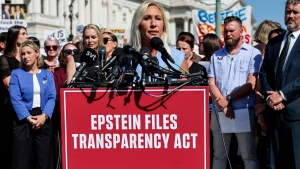
Senate Democrats framed the win as a win for victims of Epstein and his accomplices. Senator Dick Durbin said in a press release statement that this bipartisan effort is “in honor of the victims……. Never in America can we tolerate such atrocious crimes”.
Many other people are happy the Epstein files will finally be released, such as ERHS student teacher Stephen Singleton, who said, “This happens a lot, it’s all just a smoke screen behind closed doors, both sides are eating dinner laughing with each other,” also adding, “It’s all just a show, so it’s good that they are getting released, but nothing will probably come from it.”
These are the thoughts of many people, which makes sense because the final challenge now lies with the DOJ. Critics are watching closely to make sure the department adheres to the law and doesn’t use exemptions as a loophole to shield powerful names and evil people. If handled well, the list can shed light on Epstein’s network, revealing previously hidden connections and prompting accountability.