

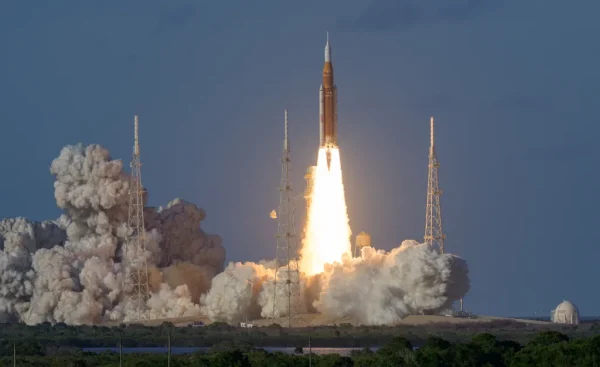
At 3:35:12 PDT on April 1, 2026, four 2.4-meter-diameter RS-25 engines and two solid rocket boosters roared deafeningly on ignition, lifting the Space Launch System and the Orion capsule off Launch Complex 39B at the Kennedy Space Center in Merritt Island, Florida. This was the liftoff of the National Aeronautics and Space Administration’s Artemis II, a highly anticipated mission that sought to carry humans back to the Moon for the first time in almost 54 years.
Eight minutes into the mission, the crew, with Commander Reid Wiseman, Pilot Victor Glover, and mission specialists Christina Koch and Jeremy Hansen, reached orbit. The altitude was then raised to high Earth orbit, more than 22,000 miles above the planet, the first time humans have left low Earth orbit since Apollo. After about 25 hours in this orbital configuration, the Interim Cryogenic Propulsion System performed a final trans-lunar injection burn, raising apogee to within lunar distance. This maneuver ultimately propelled the Orion capsule, named “Integrity” by the crew, to the Moon. The spacecraft would then follow a free-return trajectory, circling around the dark side of the Moon and effectively using the Moon’s gravity to slingshot back to the Earth. This fuel-efficient path allowed NASA to stress test the craft and equipment in the inhospitable vacuum of deep space.
Around the Moon, the crew broke the distance record from Earth, reaching 252,766 miles. The record was previously held by Apollo 13 on their daring return to Earth.
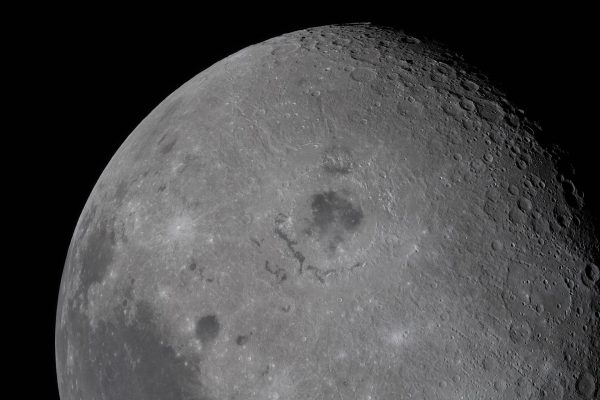
The crew lost all communication with Earth for roughly 40 minutes when they traversed the dark side of the Moon, seeing parts of our natural satellite that no other humans in history have seen before. When they acquired the signal again, the crew announced to Mission Control that they wished to name a newly discovered crater “Carroll,” after Commander Reid Wiseman’s late wife.
Today, April 10, at 5:07 PM PDT, Artemis II will return to Earth and splash down in the Pacific Ocean 50-60 miles away from San Diego to be retrieved by the USS John P. Murtha. This will be the conclusion to a major step towards permanent human presence on the Moon. Artemis III, scheduled for mid-to late-2027, will be an extended stay in low Earth orbit to test safety systems, while Artemis IV, scheduled for 2028, will land humans on the Moon.
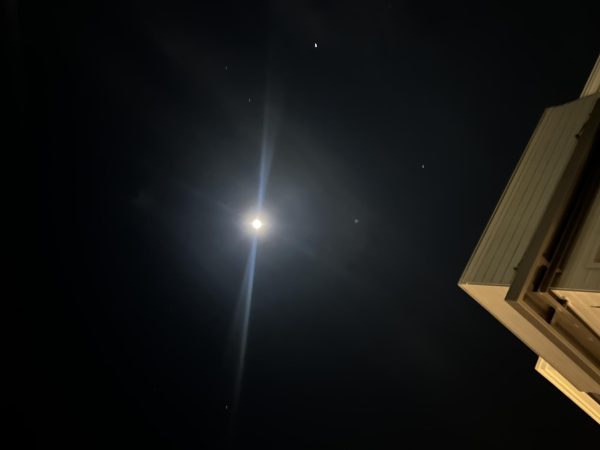
The meaning of this mission, however, goes far beyond our nation’s goals. Artemis II serves to inspire generations of Americans and people worldwide. I watched the launch of Artemis II in my living room with my family. I saw firsthand the awe and amazement at this historical accomplishment as we yet again reached for the stars and embarked on a journey to that bright orb in the sky that every human, past and present, has lived under.
“I think the launch was genuinely so inspiring, especially as a woman in STEM,” shared student Joan Narciso, “Women are continuously torn down in the media, especially with the hate that Christina Koch got for that one selfie.”
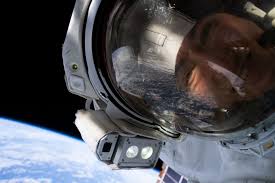
The selfie Narciso referred to was a picture that astronaut and Artemis II crew member Christina Koch took aboard the International Space Station in 2019.
“It should be a celebration of science and also the technological advancements humanity has been working towards… Even watching the launch, seeing crowds of people gathered to watch Artemis II take off, it felt very unified, especially in this time of complete political turmoil in the country,” said Narciso.
Narciso concluded by saying, “As an aspiring engineer, I’m excited to see how the field keeps progressing and the achievements that are waiting to be made. As a girl, I’m very proud to see people like me in space! It shows me that even with historical discrimination, women are continuing to break those barriers and make our place in a space that once rejected us.”
Even with the pride and amazement Artemis II has inspired, many remain critical of how the mission is being handled, particularly by the current administration.
Reese Sypowicz, a history student at California Polytechnic University, Pomona, gave her view on the event.
“Science-wise, it is a big deal. The first Moon landing was in competition against Russia… America came on top, morale boosted, and created national pride. I feel like that feeling is being replicated because of the recent actions taken by the president, which have put him out of favor. But the funding for NASA being cut shows he’s not willing to commit to the efforts, but is taking credit for achievements he is actively setting back.”
Even with the extraordinary achievement Artemis II has been, a viewpoint like the one Sypowicz expressed shows the continued need for criticism of the political aspect of scientific progress and human exploration.
Despite all criticisms, the overall attitude towards Artemis remains positive as Americans and the world watch on for the next giant leap for mankind.