“It was not Hitler, Göring, Goebbels, or Himmler who had me dragged away and beaten. No, it was the cobbler, the neighbor, the old man, the milkman, the postman, those without form suddenly given armbands and a cap on their heads, and then they were the master race.”
—Karel Stojka
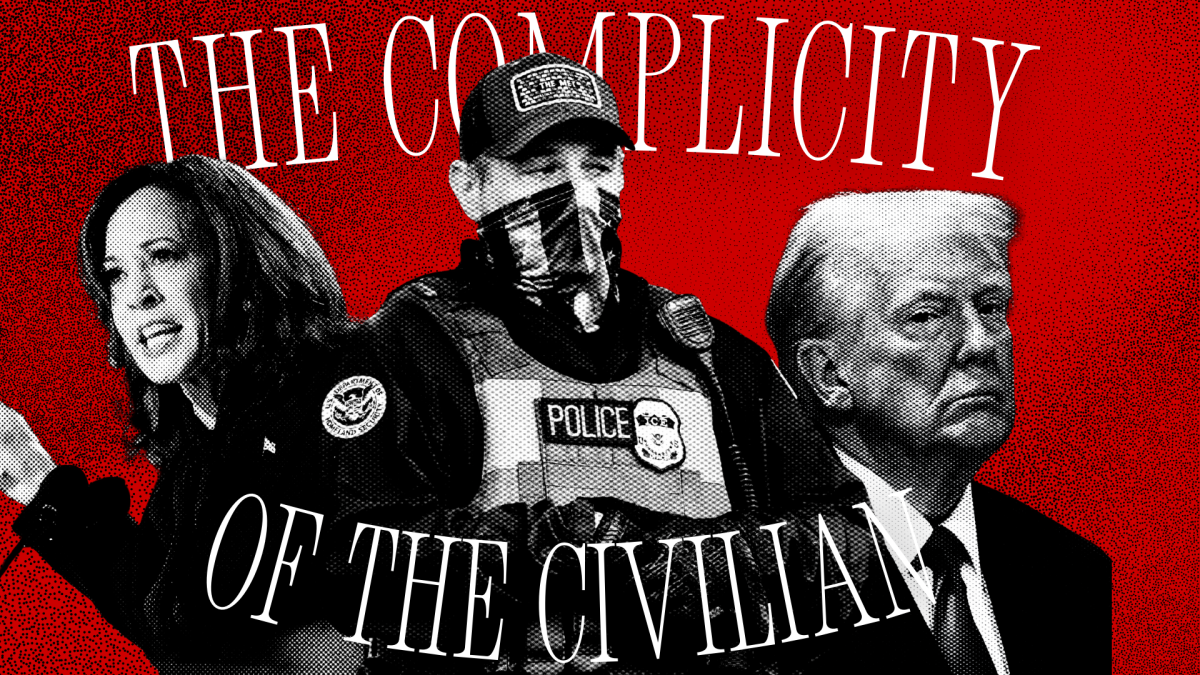
Throughout the life of the average American civilian, very rarely will they ever consider the United States to be an inherently Fascist nation. It is even rarer, for an American civilian, to consider themselves as an indirect participant in said Fascism. Greyson Maliki, a Freshman at ERHS said that he believes, “. . . civilians play a role sometimes, but not always.”
For many of us, America exists as a nation which has formally committed many atrocities, but of which we have “recognized” and have grown from. In the past, not many ever considered that the nation could ever turn on its own people, and that the violence they constructed in foreign nations would remain beyond our borders. However, in the current political climate of the Trump regime—which has launched murders in public streets, kidnappings in schools and workplaces, federal control of Washington D.C, and bold invasions of foreign nations such as Venezuela—Americans have begun to consider if the nation could be falling inward on itself. In continuing that same line of thought, could it also be possible that we, as civilians, are allowing this to occur?
The vast majority of Americans spend an average seven hours of screen time daily–where they expose themselves to the influence of whomever is behind the screen of their latest video. At the same time, social media has officially surpassed television as America’s main news informant as of 2025, according to Oxford’s Reuters Institute. This statistic, no matter how one feels about it, is no doubt just one result of our ongoing golden age of entertainment. For the very first time, independently filmed political videos are being seen more than ones shown on television. This new-found ability of the masses being able to witness the hypocrisy and violence of the police force, Republicans, and Democrats, has offered a brand-new perspective that while previously blocked out of popular news reporting, has been given a new way of communication—social media.
Despite all of the positive aspects of this development, such as previously silenced voices finally being heard, and education becoming more accessible to the public, it is important to wonder who is actually informing us, and who is getting the most attention.
Charlie Kirk, the recently assassinated far-right political debater, had a following of over 1.7 million Instagram followers at the time of his death, and that number has grown massively to over 13.1 million at the current day. His supposed “martyrdom” has infamously run rampant on not only social media, but in real life as well, with large demonstrations in his honor sparking in the country. Baring this in mind, one should wonder what it was exactly that Kirk stood for, and how he used his influence over the masses.
It was no secret that Kirk, as the founder of Turning Point USA, was a staunch supporter of Donald Trump. And as such, it is, in my opinion, that it would not be incorrect to label him a fascist, who spread misinformation on immigration laws on college campuses, believed that the Civil Rights Act of 1964 was, “a mistake,” that had been turned into “an anti-white weapon,” and supported mass deportations. So, why is it now that after he has died, people are in so much support of him? It is very simply answered due to his framing as a “martyr” of right-wing politics, who was killed simply due to his political opinions, turning a blind eye to the harmful rhetoric he spread.
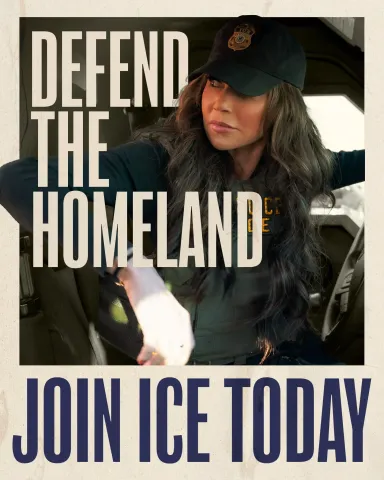
This rose-colored framing of political figures is nothing new from the Trump regime and has only gotten more common. It is most popularly, and unsurprisingly, focused on the promotion of ICE (Immigration & Customs Enforcement). The organization which has wreaked havoc upon the people living in the United States, kidnapped immigrants, covered their faces with cloths and have fired their weapons upon anyone who they do not deem worthy of living. And so, it is important to wonder who exactly are these soldiers that can apparently do as they please? Very simply, and very terrifyingly, they are our own countrymen. ICE Agents are not simply soldiers with no life or mind underneath their uniforms. They are completely conscious of their actions, as they proudly proclaim so, and willfully sign up for the job. According to Homeland Security, ICE has had a historic increase in 120% manpower, with 12,000 more officers being allowed into action, and more then 220,000 applications.
The eagerness of these volunteers seems to me to be due to the resurgence of so-called, “patriotism” among MAGA supporters, who truly do believe that what they are doing is best for the nation, and have let their delusions bait them into becoming murderers. It is not so hard for a person to lose their humanity, when they believe that the people they are up against are not humans at all. And so, in the face of these rising dangers, people around the world have begun to question what the remaining civilians of America have been doing to protect themselves, and their neighbors.
The many protesters across the country who march for an end to the Trump administration have inspired many formally “apolitical” Americans to become more engaged and active, causing them to transfer from the title of a civilian to a protester–an obstacle, in the eyes of the regime. A “domestic terrorist,” who is standing in the way of their path to Trump’s ideal America. In the face of a fascism, civilians who resist do not exist. Simultaneously, civilians who are in support of fascism, also do not exist, and are only agents out of uniform. These ‘civilians’ are in the same flock of those who turn in their own neighbors to ICE, those who voted for the regime to come into power for their own selfishness. In times of oppression, terms of normal days such as “middle ground” become irrelevant, and one must be forced to pick a side. Disagreement on policies is no longer a reflection on your political standpoint, and instead one of your moralities.