

There is a famous but unconfirmed story about a banquet in Germany that took place in 1934. This was in the wake of the rise of Adolf Hitler and the National Socialist German Workers’ (Nazi) Party. Hitler had been appointed chancellor by Paul von Hindenburg in January of 1933 and convinced the German parliament, the Reichstag, to grant him “emergency powers” to execute his duties in office via the Enabling Act. This legislation gave him immense power to essentially circumvent von Hindenburg and the Reichstag. With the power Hitler and the Nazis wielded, they violently purged German society of many minority groups, most infamously the Jewish people, as Jewish men and women across the country were removed from their positions and occupations, including at academic institutes.
Beginning with Hitler’s rise to the chancellorship, thousands of scientific and mathematical experts fled persecution, most eventually settling in the United Kingdom or the United States. Some of these included Albert Einstein, Edward Teller, Wolfgang Pauli, and John von Neumann. Many studies, including one from the Atomic Heritage Foundation, estimate 25% of all scientists Germany employed fled the country, perhaps the most devastating brain drain in recorded history.

Arguably, the capital of Germany’s intellectual apparatus before the purge was the University of Göttingen. The institution was a college attended by some of the most talented physicists, chemists, and mathematicians in the world during this time: Max Born, Werner Heisenberg, Emmy Noether, J. Robert Oppenheimer, Enrico Fermi, Constantin Caratheodory, Paul Dirac, and many more. To say the university was beaming with talent would be a grave understatement. In fact, quantum mechanics was essentially invented at Göttingen.
After the purge, most of those names were all but erased as the Nazi government imposed its own standards for the study of physics, emphasizing a classical and near purely experimental approach referred to as “Deutsche Physik,” literally meaning “German physics,” all while completely renouncing modern, highly mathematical theories like quantum mechanics and relativity. Professors were banned from teaching Einstein’s and Born’s theories, which were pejoratively deemed as “Jewish science.”
This brings us to the aforementioned banquet in 1934.
David Hilbert, a mathematician at Göttingen, was present at this banquet. Hilbert was, to speak plainly, a titan in the world of mathematics. He had worked personally with Einstein to develop the mathematical framework for the general theory of relativity.
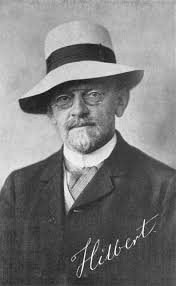
Sitting next to Hilbert at this banquet was the Nazi Minister of Education, Bernhard Rust. At one point, Rust inquired of Hilbert, “How is mathematics at Göttingen, now that it is free of Jewish influence?”
Hilbert simply replied, “There is no more mathematics at Göttingen.”
While Germany shut itself off to scientific advancement, the Allied powers readily granted these men and women residency in exchange for their talents in their respective fields. Within 12 years of Hitler’s rise to power, the United States developed an atomic bomb while Germany’s feeble “Uranprojekt” struggled to create stable reactors and never possessed enough heavy water to maintain them.
Today, the threat of brain drain is very real. One poll from Nature of over 1,200 scientific experts in the country showed 75% said they were considering leaving the United States to apply their talents elsewhere. The most common complaints? Funding cuts and discriminatory treatment.
In September, Immigration and Customs Enforcement (ICE) detained 475 workers at a Hyundai car factory in Georgia, including many skilled engineers and technicians. ICE claimed the operation was targeting illegal employment.
Consequently, UCLA mathematician Terrence Tao has described the academic world as more “fluid and unstable” than at any time in the last 30 years. Such a tumultuous environment is antithetical to proper and effective research.
Scientists have admitted to changing the names and abstracts of certain studies to avoid conflict with the Robert F. Kennedy-run Department of Health and Human Services. The CDC ordered a pullback of several research articles in alignment with President Trump’s executive order, recognizing only two genders, according to Reuters.
In Maryland, more than $120 million in grants are expected to be cut from public universities. According to CalMatters, over 100 colleges in California are expecting significant cuts to tutoring and academic services, impacting millions of students and prospective students, including many members of minority communities.
“Frankly, the proposed funding cuts… would only slow down the progress we’ve made,” says ERHS student Adrian Vega. “Programs are already understaffed as it is.”
ERHS calculus teacher Nicholas Loppicolo offered his perspective.
“If people are not utilizing the funds well, then yes, there could be cuts,” Lippicolo said. “Now let’s say all of it is being used well, I think we as a country still want to be a number one power, advanced, brag about our technology.
“The M in STEM is mathematics,” Lopiccolo continued.”So yes, mathematics is a driving force… once we see some kind of application that the mathematicians prove.”
When asked if the funding cuts to universities could impact lower institutions, like high schools, Lopiccolo responded, “We don’t do research here, but I know we get from the universities what we should emphasize in class… I just don’t know how big the impact would be.”

The truth is that this is a massive issue that affects all of us. Research is vital to advancements that keep us ahead of our adversaries and progress humanity as a whole. If we create a hostile environment that completely impedes research and education, we stand at risk of falling behind technologically, as Germany once did.