

On October 22, 1962, President John F. Kennedy addressed a shocked nation on live television, informing the American public of the installation of Soviet nuclear missile launch sites in Cuba, just 90 miles off the coast of Florida. The address began as follows:
“Good evening, my fellow citizens: This government, as promised, has maintained the closest surveillance of the Soviet military buildup on the island of Cuba. Within the past week, unmistakable evidence has established the fact that a series of offensive missile sites is now in preparation on that imprisoned island. The purpose of these bases can be none other than to provide a nuclear strike capability against the Western Hemisphere.”
President Kennedy’s words weighed immensely on the world as the clock ticked closer to midnight. The following week would be perhaps the tensest in human history as two superpowers, the United States and the Soviet Union, faced off, both ready to launch weapons of mass destruction with the sole purpose of annihilating one another.
But in the end, this is not what happened. As we’ve learned in history class, the two countries made an agreement where the United States removed nuclear warheads from Turkey and Italy in exchange for the removal of Soviet warheads from Cuba. In the face of the possibility of total nuclear holocaust, the most powerful attribute was restraint and diplomacy.
President Kennedy imposed a naval quarantine on Cuba to halt Soviet shipments. Many in his cabinet favored invasion or airstrikes, but these options guaranteed Soviet retaliation. Even facing pressure, Kennedy chose the right option. It was a keen display of intelligence, awareness, and above all, decency. His geopolitical savvy led to the peaceful end of the Cuban Missile Crisis, averting the worst conflict in human history.
President Kennedy was a leader. He famously addressed Congress on May 25, 1961, challenging the newly created National Aeronautics and Space Administration (NASA) to commit itself and the country to “achieving the goal, before this decade is out, of landing a man on the Moon and returning him safely to the Earth.”

Like all great leaders, Kennedy set a tangible goal and pushed those around him to strive for that goal. He had a desire to show the world this country’s greatness and possessed a natural drive to accomplish those goals. This was the leadership, dignity, and decency of President Kennedy.
When asked about Kennedy’s leadership, ERHS history teacher Ernesto Rangel shared his favorite quote by the former president.
“‘Let us not seek the Republican answer or the Democratic answer, but the right answer. Let us not seek to fix the blame for the past, let us accept our own responsibility for the future.'”
“That was leadership, uniting a divided nation through courage and vision,” said Rangel.
On October 18, President Trump spoke with the press aboard Air Force One in the wake of the $20 billion aid program to Argentina. A young reporter asked, “What do you have to say to US farmers who feel that the deal is benefiting Argentina more than it is them—”
However, Trump cut her off before she could finish. “Look, look, Argentina is fighting for its life, young lady. You don’t know anything about it,” said Trump. “I happen to like the president of Argentina. I think he’s trying to do the best he can. But don’t make it sound like they are doing great. They are dying, alright? They are dying.”
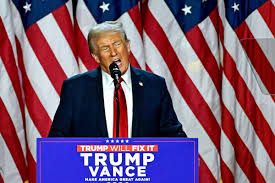
This condescension is shown by the president in calling the reporter “young lady” and saying she did not “know anything about it.” This is just another instance of many of the president’s controversial clashes with reporters. Another such example ended in Trump calling reporter Ebony McMorris “really obnoxious” to her face.
In comparison to Kennedy’s words and actions, many believe that Trump fails to reflect this same decency.
“This is the first president we’ve seen who just posts AI videos of him doing horrendous things, like dropping excrement on protesters or arresting Obama,” said Max Neimeyer, an eSTEM student. “He tweets all the time in all caps and he’s always bragging.”
“The American people should definitely have a higher standard for character and maturity in terms of leadership,” Neimeyer added. “I haven’t seen Abraham Lincoln’s tweets, but I don’t think they would have been that bad.”
It is not an unreasonable standard for a president to show decency and leadership. President Kennedy showed both when he called for unity and for the country to go beyond what was thought possible. President Trump, however, does not possess any of those attributes and acts with childish immaturity. In America, we can disagree on policies, but we cannot disagree on the example we must set for the free world.